THE LABS YOUR ENDOCRINOLIGIST SKIPPED · YOUR 6-MONTH ROADMAP STARTS HERE · NO BLIND GUESSING

for high-performing executives struggling with hypothyroidism or Hashimoto's

I'll run the labs that investigate what standard thyroid testing skipped

(and build your custom protocol to reverse your symptoms in just 6 months)

Stop settling for increased dosages, expensive supplement stacks, elimination diets, and lifetime of gluten-free. Your thyroid and autoimmune response is connected to your gut, hormones, nutrient & mineral deficiencies, adrenal, liver, and nervous system and I can prove it.

NO DEFAULT ELIMINATION DIET NO $400 SUPPLEMENT STACK NO BLIND DOSE INCREASE

still have symptoms? your labs missed something.

Standard thyroid tests are designed to check one number: TSH. If it falls inside the “normal” range, you’re told your thyroid is fine.

But your symptoms come from what that one marker misses: poor conversion of T4 into active T3, rising thyroid antibodies, nutrient deficiencies, and the gut and immune triggers behind them.

Finding the root cause means a full thyroid panel (Free T4, Free T3, Reverse T3, TPO and TG antibodies) plus the deeper markers that show why your thyroid is struggling. That’s more than a standard test was built to give, and it’s why you still feel exhausted while being told your labs look “normal.”

Continue to your roadmap-call invitation.

Enter your details so I can save your assessment and show the next step.

choose what keeps showing up

THE LAB CHANGED.

why didn’t you?

Tap the symptom that feels most familiar. I’ll show you why it belongs in a wider six-month investigation—not another one-size-fits-all answer.

Why it matters

tired after a full night of sleep

Fatigue can overlap with thyroid function, iron status, sleep quality, blood sugar, medication timing, and more. The roadmap separates those questions instead of treating fatigue as proof of one cause.

Map what may be missing →

Why it matters

doing everything right and the scale won't move

Weight changes can involve thyroid hormones, insulin, stress, sleep, protein intake, and medications. The roadmap looks at those pieces together instead of blaming willpower.

Map what may be missing →

Why it matters

words on the tip of your tongue

Brain fog can connect to hormone levels, nutrient status, blood sugar swings, and sleep. The roadmap helps you sort which questions are worth bringing to your provider.

Map what may be missing →

Why it matters

thinning hair and skin that feels different

Hair and skin changes can reflect thyroid function, iron and protein status, and other nutrients. The roadmap lays out what to look at before assuming it's just age.

Map what may be missing →

Why it matters

a gut that never feels settled

Digestion can affect how well nutrients and medication are absorbed, and the thyroid can affect digestion in return. The roadmap shows where those two meet.

Map what may be missing →

Why it matters

another dose change, same symptoms

When symptoms continue despite dose adjustments, timing, absorption, and other factors may be part of the picture. The roadmap helps you prepare clearer questions for your next appointment.

Map what may be missing →
STILL MEDICATED, STILL EXHAUSTED ✦ A “NORMAL” NUMBER DOESN’T EXPLAIN EVERY SYMPTOM ✦ MORE DATA ISN’T ALWAYS BETTER—BETTER QUESTIONS ARE ✦

why nothing has worked yet

Three familiar answers.

none is a roadmap.

Your medication and clinical labs can matter. The problem is when they become the end of the conversation while persistent symptoms and overlapping gut, immune, nutrient, metabolic, or lifestyle questions remain unexamined.

01

increase the dose

Why it can miss the mark

Levothyroxine supplies T4, which the body normally converts to active T3. A medically appropriate dose replaces hormone; it does not by itself investigate digestive symptoms, absorption, celiac disease, iron status, sleep, blood sugar, or every other reason you may still feel unwell.
02

start a supplement stack

Why it is still guessing

Ten products and a default elimination diet introduced together make it hard to know what helped, what caused side effects, or whether the protocol answered the right question. I test the question—not your tolerance for buying more bottles.

03

stop at basic labs

Why context matters

Endocrinology commonly uses TSH and Free T4 to diagnose and monitor primary hypothyroidism; T3 and thyroid antibodies have narrower uses. Those labs matter, but they do not evaluate every digestive, immune, nutrient, metabolic, or lifestyle contributor to persistent symptoms.

three approaches · one clear difference

Diagnosis names the condition. My labs investigates what is still unanswered.

Conventional care can diagnose and prescribe. Generic functional care can still guess. I build a sequenced six-month investigation so every test, support, and follow-up has a reason.

Conventional endocrinology

diagnose + medicate

Usually centers: TSH, often Free T4, diagnosis, medication, and follow-up.
The gap: short visits may leave little room to investigate digestion, nutrition, stress, blood sugar, or implementation when symptoms persist.

necessary medical care. not a six-month investigation.

Generic functional care

protocol + products

Often looks like: a broad panel—or no testing—followed by a standard elimination diet and a long supplement list.
The gap: too many changes at once can become another guessing game, even when it is called “root cause.”

different label. same lack of sequencing.

The Bee Collective roadmap

investigate + sequence + sustain

I start with: your timeline, existing clinical labs, medication context, symptoms, digestion, nutrients, metabolism, sleep, and stress.
Then: I identify the next useful question, build the six-month sequence, and adjust one intentional phase at a time.

The clearest path when “normal” still feels awful

the gut-thyroid conversation

Your thyroid is a hormone gland. Your symptoms still live in a whole body.

The gut barrier, resident microbes, immune system, nutrient status, metabolism, and stress response communicate. Research reports associations with autoimmune thyroid disease, but association is not proof that “the gut caused your thyroid.” The reason to look wider is simpler: overlapping problems can be missed when every symptom is routed back to a dosage.

THYROIDfunction + response

one symptom can have more than one contributor.
that is why I map before I act.

what happens when the picture stays incomplete

Persistent symptoms are not proof of one root cause.

they are a reason to stop guessing.

Medication can be necessary and effective. But when symptoms, digestive concerns, or autoimmune context continue, “wait and increase later” should not be the only conversation.

What were you told?

How long has this been part of your life?

my educational outlook

I would review:

    01

    thyroid diagnosis

    Medication and clinical monitoring address thyroid-hormone replacement.

    02

    persistent pattern

    Fatigue, gut symptoms, weight, mood, or cycle concerns may still need their own evaluation.

    03

    autoimmune context

    If Hashimoto’s is confirmed, coexisting conditions such as celiac disease may warrant clinician-guided review.

    04

    a broader plan

    The roadmap organizes what is known, what remains uncertain, and which next question is actually useful.

    Not
    inevitable

    Hypothyroidism does not automatically “turn into” Hashimoto’s, and Hashimoto’s does not guarantee celiac disease or colitis. Risks and progression vary. The purpose of broader review is appropriate evaluation—not fear.

    what i may review

    Testing should answer a question.

    not create a shopping list.

    I may discuss targeted testing when your history, symptoms, risks, medication context, and goals raise a specific question. I never use one wellness result alone to diagnose disease or determine treatment.

    Comprehensive

    Bloodwork

    Selected as indicated

    Thyroid + immune

    TSH · Free T4 · Free T3 · Reverse T3 · TPOAb · TgAb

    Iron + nutrients

    ferritin · iron · vitamin D · B12 · zinc · selenium

    Blood sugar

    fasting glucose · insulin · A1C

    Foundations

    CBC · CMP · lipids · liver markers

    01 · Clinical foundation

    comprehensive bloodwork

    I review thyroid function, antibodies when appropriate, iron and nutrient context, glucose and insulin, lipids, liver markers, and the rest of the relevant clinical picture.

    • TSH + Free T4 in context
    • Antibodies for appropriate questions
    • Iron, nutrients, metabolic markers
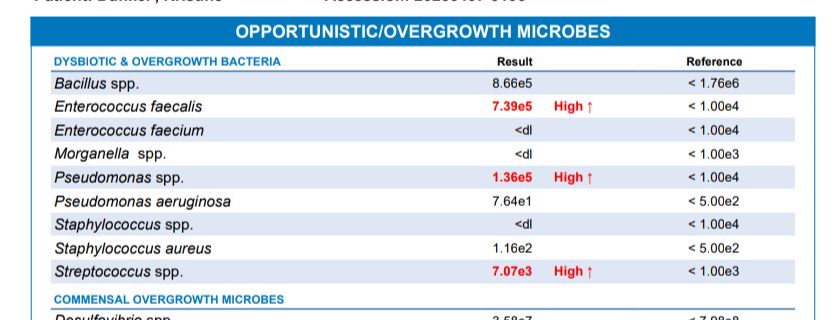
    Example GI-MAP report format

    02 · Digestive context

    GI-MAP

    I may review selected stool markers as a snapshot for a defined digestive question. I do not present it as a diagnosis of dysbiosis or the cause of thyroid symptoms.

    • Selected pathogens and H. pylori
    • Digestive and inflammatory markers
    • Always interpreted with symptoms
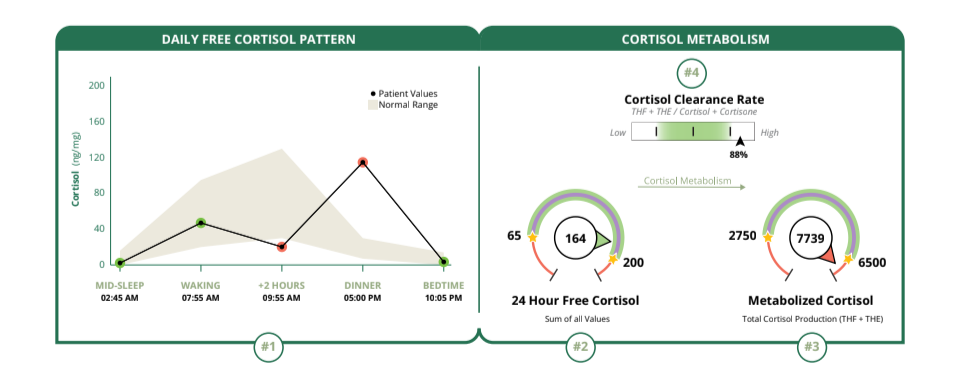
    Example DUTCH hormone report format

    03 · Hormone metabolites

    DUTCH

    I can review measured urine hormone metabolites as context. I do not use a DUTCH profile to diagnose a vague “hormone imbalance” or prescribe medication.

    • Urine hormone metabolites
    • Pattern context—not a diagnosis
    • Integrated with history and care
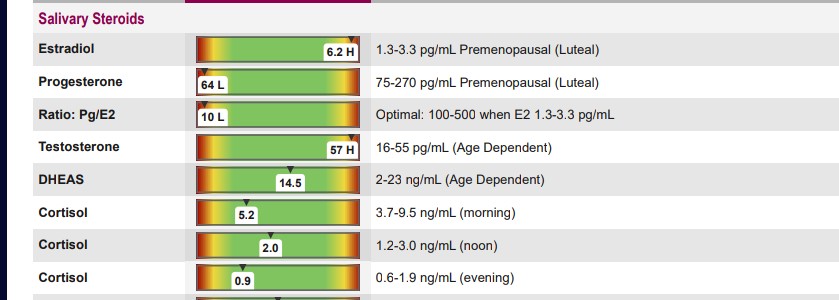
    Example salivary hormone report format

    04 · Targeted hormone context

    blood spot + salivary markers

    I distinguish validated clinical uses from broad wellness claims. Collection method, timing, symptoms, and the exact clinical question all matter.

    • selected blood spot markers
    • how each hormone interacts with the others
    • timing and collection context

    Example images are educational and are not client diagnoses. Test selection, interpretation, limitations, and medical follow-up depend on the individual.

    your six-month thyroid restoration roadmap

    Six months. Six intentional phases. No pile-on protocol.

    The deliverable is a personalized roadmap: what to investigate, what to support first, what to measure, and when to reassess. It supports—not replaces—your clinical thyroid care.

    Month 01

    01

    map

    History, symptoms, medication context, current labs, priorities.

    Month 02

    02

    investigate

    Select the next useful clinical or functional question.

    Month 03

    03

    stabilize

    Build realistic nutrition, sleep, stress, and blood-sugar foundations.

    Month 04

    04

    target

    Add only the support justified by the information available.

    Month 05

    05

    measure

    Track symptoms, tolerance, adherence, and appropriate follow-up data.

    Month 06

    06

    refine

    Keep what helps, remove what does not, and set the next horizon.

    See if the six-month roadmap fits me →
    Brandee smiling in her kitchen

    meet the woman behind bee collective

    Women's Holistic Nutrition

    hi, I’m Brandee

    I know what it feels like to be out of sync with your own body.

    I’m a Certified Nutrition Therapy Practitioner, outdoor enthusiast, and unapologetic diet-culture dropout. After 17 years on hormonal birth control, a PCOS diagnosis, and now navigating perimenopause, I know firsthand how exhausting it is to be told that everything looks fine when you know you do not feel like yourself.

    That is why I do this work. I believe women deserve better questions, honest education, and a plan that respects both their lived experience and the limits of what any one test can prove.

    Certified Nutrition Therapy Practitioner

    Candid, collaborative, implementation-focused support

    before you talk yourself out of it

    THE QUESTIONS BEHIND “MAYBE I SHOULD WAIT.”

    These are the real decision blocks I hear before someone finally chooses a more structured investigation.

    should i keep increasing my dose before I invest in this?

    Medication decisions belong with your prescriber, and you should never delay or change prescribed treatment because of this program. The six-month roadmap serves a different purpose: it organizes persistent symptoms, treatment context, digestion, nutrition, metabolism, stress, and unanswered questions alongside medical care.

    can insurance cover this?

    I do not accept or bill insurance. HSA/FSA funds may be used where eligible; confirm eligibility with your plan administrator.

    can hsa or fsa funds cover it?

    Many clients use HSA/FSA funds for eligible services or products. Eligibility varies, so confirm with your plan administrator. I can provide the documentation available for the services you receive.

    can my endocrinologist order the functional labs?

    You can ask. Your endocrinologist or PCP decides which medical tests are appropriate. Some specialty wellness tests fall outside their practice or may not be clinically indicated; if a test is discussed here, it should answer a defined question and be interpreted with its limitations.

    how is this different from what my endocrinologist does?

    Endocrinology focuses on diagnosis, thyroid function, medication, and medical safety. My program adds time-intensive history mapping, nutrition and lifestyle implementation, digestive and metabolic context, and a six-month sequence. It complements medical care; it does not prescribe or replace it.

    should i see a gi doctor instead?

    If you have concerning, severe, or persistent digestive symptoms, a gastroenterologist may be exactly the right clinician. My assessment can help organize the pattern, but it cannot diagnose gastrointestinal disease. Red-flag symptoms require prompt medical evaluation.

    how do i know this will actually work?

    I cannot promise a symptom, weight, lab, or medication outcome. What I can promise is a defined process: investigate before adding, sequence instead of stacking, measure response, and revise the roadmap based on what you learn.

    Women's Holistic Nutrition

    The answers to your thyroid dysfunction and autoimmune activity are one call away

    STOP COLLECTING DISCONNECTED ANSWERS. START WITH A SEQUENCE.

    Start with the assessment.
    Get clarity on the call.